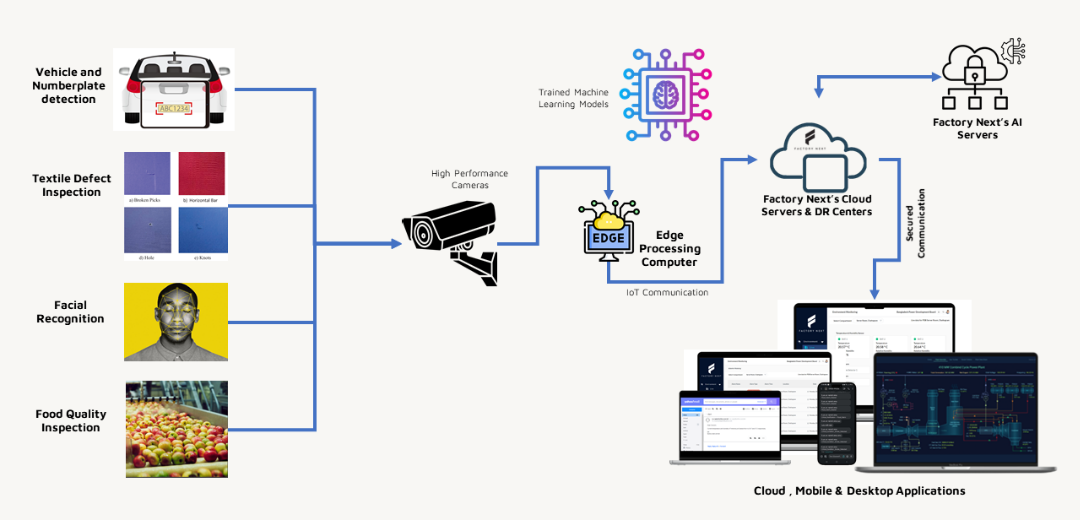
Machine learning models trained on your historical IoT telemetry — vibration signatures, temperature trends, current draw patterns, runtime cycles — to predict equipment failures, production anomalies, and quality deviations days before they occur. Works directly with existing FN Cloud data streams.
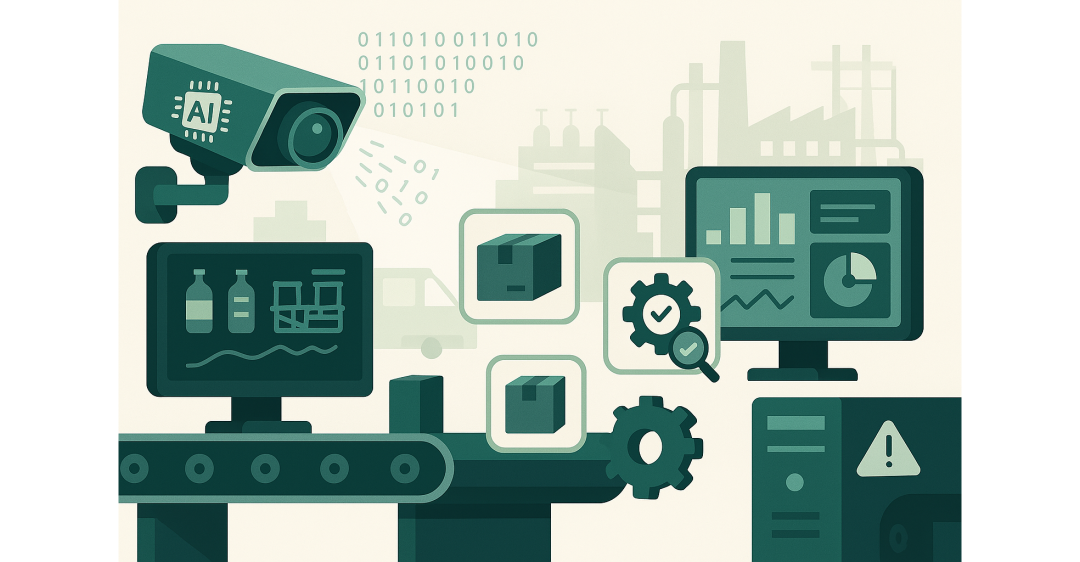
Predict failures 24–72 hours in advance, giving maintenance teams time to act before breakdowns occur.
Models run on existing FN Cloud IoT data streams — no additional hardware needed in most cases.
Outputs are maintenance recommendations with predicted failure windows, not just anomaly scores.
Models retrain automatically as more operational data accumulates, improving accuracy over time.
Track measurable improvement in Mean Time Between Failures and Mean Time To Repair over deployment period.
ML models predict equipment failure windows with sufficient lead time for planned intervention.
Specialized models for rotating equipment using vibration FFT analysis and thermal trend monitoring.
Real-time anomaly detection on any IoT telemetry stream including current, temperature, pressure, and vibration.
AI-driven maintenance scheduling that optimizes intervals based on actual equipment condition, not fixed calendars.
Track prediction accuracy over time with a dedicated validation dashboard showing predicted vs actual failure events.
Measure improvement in equipment reliability and maintenance efficiency metrics over the deployment period.
LSTM and transformer-based models trained on your specific equipment telemetry for high-accuracy anomaly detection.
Statistical survival models that estimate remaining useful life (RUL) based on degradation patterns in sensor data.
Multiple model ensemble reduces false positive rates while maintaining high sensitivity to genuine failure precursors.
FN Cloud collects and stores IoT telemetry — vibration, temperature, current, pressure — from connected equipment over time.
ML models are trained on your equipment-specific historical data, learning normal operating signatures and failure precursor patterns.
Trained models run continuously against live sensor streams, generating failure probability scores and remaining useful life estimates.
When failure probability exceeds thresholds, actionable maintenance recommendations are generated with predicted failure windows and suggested interventions.
Vibration and current signature analysis to predict bearing failures, winding degradation, and imbalance before breakdown.
Thermal and vibration monitoring to predict turbine blade wear, generator winding faults, and cooling system degradation.
Cavitation detection, bearing wear prediction, and impeller imbalance identification for critical process pumps.
Predict HVAC filter clogging, AHU motor wear, and autoclave heating element degradation to prevent GMP deviations.
Spindle bearing wear prediction and loom mechanism fault detection to minimize production line stoppages.
Compressor health monitoring and refrigerant leak prediction for cold chain and industrial refrigeration systems.